Showing posts with label World Affairs. Show all posts

January 1, 2019

Lets Tackle World Affairs #3

 World War I (1914-18) or The Great War


"I declare World war I open"
                                    Gavrilo Princep on shooting Archduke Francis Ferdinard (not really!)


The Allies (Triple Entente) - UK, France, Russian Empire, Italy ( was part of Central powers but later shifted sides for getting  Terentina and Triesta of Austro-Hungarian Empire)

The Central powers (Triple Alliance) - German Empire, Ottoman Empire, Austro-Hungarian Empire


  • The immediate trigger was Austria-Hungary declaring war on Serbia (an ally of Russia) for the murder of Archduke
  • The main feature of the war was the slow nature of Trench warfare, only Tanks provided mobility of some sort
  • The Schlieffan Plan was the German plan to attack Russia on eastern front and France on western front  through Belgium
  • The Battle of Tannerberg was a major defeat for Russian Empire against Germany in 1914
  • The first battle of Merne saw Germany reaching within 30 miles of Paris but were defeated by both France and Britain
  • The Second Battle of Yepres in 1915 saw the first use of Chlorine gas by Germans 
  •  Gallipoli campaign was a joint Anglo-French operation to take over Constantinople (capital of Ottoman empire) in 1915 but failed miserably. It created a huge dent to Winston Churchill who had a major role in offensive to Turkey. 
  • The Allied troops in Bulgaria is known as "forgotten army" since they didn't see any actual action against Serbs
  • German submarines or "U-boats" caused major destruction to Allied shipping but was countered using "Convoy system"
  • The Zeppelins were hot air vehicles used to bomb London by Germans. The Paris Gun (William's gun) was a massive rail gun with 130km range used by Germans to target Paris.
  • Battle of Jutland, biggest naval battle of World war I, saw the first use of aircraft carriers
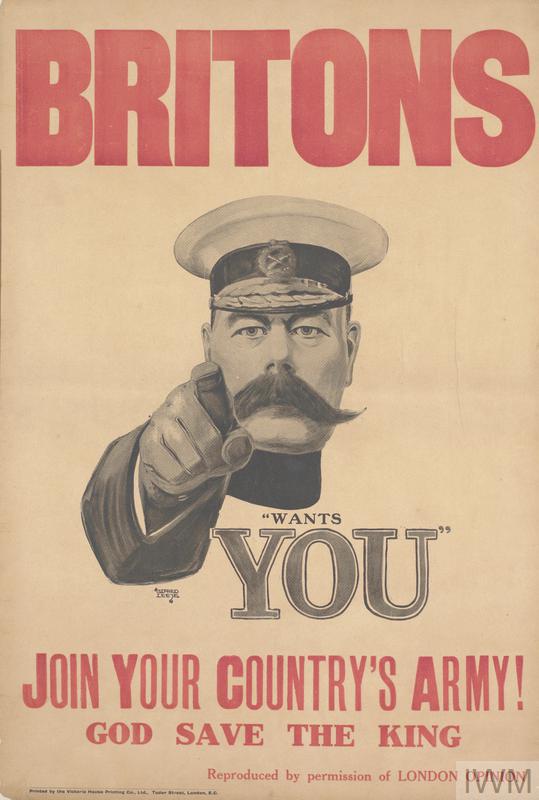
  • Lord Kitchner, was the British Secretary of War, and used the famous "Britain wants You !  Join your Country's Army" poster for recruiting people
  • Battle of Verdun between Germany and Anglo French joint force in 1916 was the longest battle in WW1
  • US entered war under President Woodrow Wilson in 1917 following sinking of passenger ship RMS Louistania killing many Americans and reports of German assistance to Mexico
  • Nivelle Offensive was planned by French General Nivelle which promised to end the war in 48 hours with hardly 10000 casualties but ended up in huge failure causing his dismissal
  • General Petatin was credited for diffusing a major mutiny in French armed forces during 1917
  • The war caused downfall of Russian empire and a provisional government was established in Petrograd (St.Petersburg) under Alexander Kerensky following February revolution
  • Germans sent Lenin to Russia in a sealed train strengthening the October revolution that overthrew the provisional government in Russia and executed the Tsar Nicholas II with his family, and signed peace treaty with Germany
  •  Colonel T.E Lawrence of British army had a major role in organizing Arab revolt against Ottoman empire. His life was portrayed by Peter Toole in the movie "Lawrence of Arabia"
  • Battle of Vettorio Veneto in 1918 between Italy and Austro Hungarian Empire caused the downfall of the empire
  • 11 November 1918 Armistice was signed. Woodrow Wilson put down '14 points' under which League of Nations was formed with Headquarters in Geneva
  • The Treaty of Versailles was the treaty signed to officially end World War I
  • Paul Von Hindenburg became the president of Weimer Republic which was followed after abdication of throne by Kaiser William I of German Empire
  • Mustafa Kemal Ataturk, a Field Marshal established the secular republic of Turkey on the ruins of Ottoman Empire

Media

  • Shoulder Arms (1914) was a Charlie Chaplin satirical film on WW1
  • "They shall not be forgotten" is a 2018 restored documentary feature on Trench warfare by Peter Jackson
  • "For the Fallen" is a poem by Lawrence Binyon, sang usually on anniversary of Armistice

Some more peace treaties

  • Treaty of St. Germaine - for Austria
  • Treaty of Trianon - for Hungary
  • Treaty of Neuliy - for Bulgaria
  • Treaty of Sevres- for Turkey

December 31, 2018

Lets Tackle World Affairs #2

Arab Israel Conflict

Okay peeps this is gonna be a crash down....


Some history...

  • First King of Jews was believed to be Saul followed by David (the most popular) and then Solomon
  • Solomon Temple in Jerusalem was destroyed by Babylonian King Nebuchadneszzar I around 587 BC
  • Jews returned to Israel during rule of Persian King Cyrus the Great
  • The Second Temple was completed around 516 BC during Darius I (first Persian King to invade India)
  • Meccabian revolt was against Seleucid Empire and its Hellenistic influence on Jews
  • Israel was conquered by Romans in 64 BC under Pompeii. Under Romans, Herodth reclaimed Judea and refurbished the Temple Mount (holiest site for jews)
  • The Second Temple was destroyed and Jews were expelled in 70AD under Titus and Romans renamed Judea as Palestina 
  • When Roman empire split in 324 AD, Jerusalem was under Byzantine empire
  • Islamic relic at the site of Second Jewish temple is Dome of the Rock built under Ummayath Khalifa (Abraham is believed to sacrificed his son here)
  • Al Aqsa Mosque in Temple Mount is the third holiest site in Islam built around 705 AD and Prophet is believed to lead prayers towards Kabba in Mecca from here
  • Palestine came under Ottoman Empire in 1517

Early 20th Century..

  • Father of Zionist movement is Theoder Herzel who wrote the book Der Juden Staat, where he envisioned a state for Jews and reclaiming the lost lands which are the basic tenants of Zionism
  • In 1897, First Zionist Congress was held at Basel in Switzerland
  • Jews of European ancestry are known as Ashkenazi jews, those of Middle east origin are Mizrahi jews and those from Iberian peninsula are Sebhardi Jews
  • The secret agreement for partition of Ottoman empire by Britain and France is called Syes-Picot agreement
  • The Balfour deceleration is the statement of British Govt. for Jewish Homeland in 1917 in Palestine . Other offered regions for homeland were Uruguay and South America
  • In 1937, a proposal for two state solution for Jews and Muslims in Palestine was proposed by Peel Commission 
  • Israel declared Independence in 1948 under David Ben Gurion
  • West Bank was initially under Jordan ( its the region to west of River Jordan) and Gaza under Egypt with Jerusalem planned to be under UN control as capital of both Israel and Palestine
  • The Biblical name of the region is Judea and Samaria 

1948 onward...

  • The Arab League was established in Cairo in 1945 under Alexandria protocol (with Egypt, Iraq,Lebanon, Jordan, Saudi, Syria) 
  • First Arab Israel war took place in 1948 closely following the declaration of Israel state 
  • Muslim brotherhood is a trans national Sunni Islamist Organisation founded in Egypt in 1928 by Hassan Al Banna
  • The Egyptian mob attack on Israeli civilians were called Fedayeen
  • In 1956, the closing of strait of Tiran and Blockade of gulf of Aquaba (essential for Israeli shipping) by Egypt triggered the Suez crisis. Also Egypt had nationalised the Suez canal upsetting the British. The Joint Israeli-British-French operation had invaded the Sinai region of Egypt following the crisis. It was defused by pressure from US and USSR which also signified the end of British Global power
  • Palestinian Liberation Organisation (PLO) was established in 1964 for liberation of Palestinian land but was considered a terrorist organisation by US and Israel until 1991 Madrid conference
  • The Six Day War of 1967 gave Israel control of Sinai Peninsula of Egypt, Gaza, West bank, Sheba farms of Lebanon and Golan heights of Syria  
  • Negotiations for Six Day War were held in capital of Sudan resulting in Khartoum resolution
  • Following the Six Day War UNSC adopted a resolution for Arab Israel conflict called Resolution 242
  • The limited war between Israel and Egypt between 1967-1970 was called War of Attrition
  • In 1970 September King Hussein of Jordan expelled PLO from Jordan known as Black September raids. It was supported by Pakistan under Zia ul Haq
  • Egypt and Syria launched a surprise attack in 1973 along Sinai and Golan Heights during the Jewish day of Fasting called Yom Kippur War which ended in Camp David Accord. ( This is the first war in which US openly supported Israel)
  • Operation Litani is the Israeli invasion of Lebanon in 1978 occupying uptill River Litani
  • In 1982 Israeli Defence Forces (IDF) launched Operation Peace for Galilee invading South Lebanon. It was part of Lebanon civil war and led to formation of free Lebanon state and increasing Syrian dominance over Lebanon when Lebanon civil war ended in 1990
  • Local uprising of Palestinians against Israeli occupation is known as Intifada in 1987 following disillusionment with PLO
  • Agreements between Israel and Palestine for Peace after Intifada is known as Oslo Accords I &II [1991 &1993]. It created Palestinian authority for limited self governance and making PLO partner of Israel for peace process. PLO recognized existence of Israel state here/
  • The second Infitada (2000-05) following visit of Ariel Sharon (Israel PM) to Temple Mount led Israel to launch Operation Defensive Shield and later build west bank barrier following withdrawal from Gaza.
  • Fatah is an Palestinian nationalistic political party established by Yasar Arafat and controls West Bank region
  • Gaza is under a Sunni Fundamentalism organisation called Hamas which came to power when Israel withdrew from Gaza in 2005
  • The Shia militant group in Lebanon supported by Iran is Hezbollah. Israel fought 2006 Lebanon war against Hezbollah fighters.
  • In 2007 Israel bombed a Syrian nuclear complex under Operation Orchaid
  • Qassam rockets are domestic made fired by Hamas from  Gaza targeting Israeli settlements. Israel counter it using the advanced Iron Dome anti missile system.
  • Recently the city of Hebron was declared as a Palestinian heritage site by UNESCO


Lets Tackle World Affairs #1

Hola Amigos !

World Affairs Section of HSEE is one section where you can easily slide through with some minimal prep and smart work. It can easily give you solid 18 marks if you apply some brains, which I was able to pull off during my attempt.

What is World Affairs ?

Its not the American journal on International relations !. At least from HSEE point of view (World Affairs). 
But you got might have got an  idea from the title itself. It's interdisciplinary in nature, blending the fields of economics, history, and political science to examine topics such as human rights, global poverty, the environment, economics, globalization, security, global ethics, and the political environment.


That's the basic jargon...

The basic syllabus of the section is :

Emergence of the US and USSR; emergence of UN system; the Cold War and nuclear race; disintegration of Soviet Union, decline of Communism and rise of nationalism; Arab-Israel conflict; India and the World; NAM and role of India; India-China and India- Pakistan relations, China and the World, conflict and wars.

Democracy and Development; Challenges to democracy; North-South divide on issues of development; UN and its various developmental and peacekeeping operations; Nuclearisation and Non-proliferation; India in SAARC and ASEAN; International terrorism, fundamentalism and the War on Terror; Indo-US relations; New centres of power in Asia, Latin America and Africa.

Hunger and Poverty; Human Rights, Democracy and Development; Environmental degradation and green politics; Issues of Race, Ethnicity and Gender; Deprived Classes and minority politics; Religion in the contemporary world; Culture and Civilization; Globalization and changing economic, cultural and political landscape; Mass media and cultural change; Emergence of various popular mass movements.

Don't Freak out, basically a quick reading is enough to gain grasp on the above stuff. And keep an eye on current affairs as some stuff creep in from there. During exam make sure you try to eliminate options to reach the answers and importantly attempt all 18 ones. I will try on posting all stuff relevant to the above themes and keep you guys updated !

Peace 

February 22, 2017

If You Know Indian Society, You Are not Far From HSEE


HSEE  is not totally biased about sociology, anthropology, and political science, but it is these subjects that helps the aspirants to give their essay the true spirit of HSEE. Indian society and culture is the name that comprises of subjects like the above. MCQs are also asked for the same as well.
Prep Strategy
Although the name suggests the Indian society and culture alone, Indian philosophy should also be considered to an extent, like the Upanishads, phases of human life, and the terms and concepts  that comes under these. Another  vital part of the Indian society is the various forms of hierarchy that exists. The concepts like Sanskritsation, westernisation and modernization in India and the sociologists who proposed these concepts should be referred.
No. Just No.
 The institutions of society lays the foundation of the subject and the basic Indian laws laid upon these institutions. NCERT  12 textbooks can help the aspirants with demography of India (ref to the latest  census reports too), social movements and the changes of  1800s and 1900s, struggles of minorities and tribal groups, and get familiar with the names of the tribes in majority across the country. Political structure as well the characters of Indian constitutions are two fields of the syllabus that may help you with well-built arguments for the essay (depending upon the given topics).
The second phase of Indian society and culture deals with Indian history. It includes religious history covering the beginning  till the current scenario of that particular religion(Buddhism, Jainism, the Sikhs, the Sufis)  in India. The formation of two cults in Indian religious history(Bhakthi movement) and the beginning of Vedic era were two milestones of Indian history that brought out the major cultural changes in the subcontinent and referring to these two events can be helpful in both the parts of HSEE. Another topic that all are familiar with is about the Mughal history, but apart from the names of the rulers and their year of reign, the major architectural  creation under them and the artistes in the corresponding emperors court.
Other  components include: modern India, viceroys and governor generals of British India, Panchayathi raj system, policies adopted by the government for the development of minority groups, their struggles, feminism in India, first war of independence(1857 revolt), reformation movement, teachings of Buddha and Mahavira, Gandhi and the movements led by him as well as ahimsa. Keep an eye on the syllabus as well.
Getting thorough with all the above topics seem tiring, but once we get started, theyll no longer be an intricate task. For this section the years of important events (and not every single minor event) should be accurate in your memory, eg: the year of quit India movement, Swadeshi movement, ban of sati, etc.
Test taking strategy
For HSEE in general the MCQs can be completed on time only if the aspirants get faster with the analytical and quantitative skills. Maintain peace of mind before exam and youll answer them in splitsecond. And when it comes to the essay, well have to take a minute or two to think of all the points for the essay topic you choose. Its the essay that fetches the ticket for the candidate, so keep it simple and it would be great if certain arguments of the candidates are reflected in the essay. All the best, to all the aspiring candidates.
Refer to the following sites for few materials:
http://www.sociologyguide.com/social-stratification/Sanskritization.php ( all sociology related topics are available in this site)

February 20, 2017

Yes we can - How to tackle World Affairs

Hello aspirants!


To any student in their last year of school, this time of the year is associated with endless cups of coffee, staying up the whole of the night cramming as much as possible and those nervous few minutes before an examination begins. While HSEE is a competitive exam with a small success rate and very few seats, it is definitely possible to crack the exam without years and years of preparation. All of us who have made it to IIT M can vouch for that.

When you check the syllabus you’ll notice that General Studies takes up 50% of the total marks. World Affairs is the one section which has the potential for fetching you the most possible marks. It is something which doesn’t require much preparation but has a far-reaching consequence on your end results. It doesn’t matter if you are not preparing for CLAT or are not a quiz whiz kid. Current Affairs is easily manageable.


Current Affairs:


World Affairs seems daunting at first because literally anything could be asked in this section but looking at the past HSEE papers, you’ll realize that there is a trend. Out of the 18 questions, Current Affairs takes up only 3-4 questions. If you have been reading the newspapers diligently, these questions would be a breeze. Pay special attention to the last few months leading up to the exam and be aware of any conferences or news-making events that have occurred during the year. For example, Brexit and the U.S Presidential Elections are events that cannot be missed.


Basically everything else: 

Moving on to the rest of the questions (what most coaching centers dub as ‘Static G.K’), there are a few important fields from which questions can be asked. International organizations are quite crucial. You might be asked who the head of certain organization might be or when it was founded. Make a list of all the organizations and their heads starting from IMF, World Bank to NATO and so on. Google is your knight in shining armor. It might seem a taxing affair but it pays to do it religiously. 

International dates and wars will definitely feature in HSEE. Keep track of all the wars, countries which fought them and their key leaders in the movement. Make sure you make a list of all the important dates such as World Environment Day and International Day for Biodiversity. Apart from these, be thorough in all important International Conventions and Conferences and the cities they were held in, such as the Rio 21 conference or Copenhagen Climate Conference. Most of this might be familiar to you but you are bound to make slight screw ups. Also pay attention to the Nobel Prize winners and other award winners. This is another potential area from where you could be tested. Keep in mind that there might be few questions related to India such as the Constitution or important facts. It doesn’t mean you need to mug the constitution but know what Article 19 and Article 21 is.


How to deal with this: 


This is not an exhaustive list - there are so many things that could be asked in this section that is not possible to predict accurately. I found it useful to make a personalized list of all these things because in the process of looking for facts, you find yourself learning a lot more which comes handy in entrance exams. Pick up any of the CLAT centric G.K books or banking entrance books. I keep mentioning CLAT because they are your fellow poor souls who have to go through this too. You might find Manorama Yearbook or the Pearsons’ Concise Guide to General Knowledge mighty useful in preparing for this section as well as the other sections in History, Indian society and Ecology. 

For Current Affairs, websites such as gktoday and a lot of others are modeled for the competitive examination pattern and they help you in cracking questions instead of making you cram your facts. Also, periodicals like CSR (Competition Success Review) give a very comprehensive summation. For prepping on the go, try Inshorts, it's a pretty cool moblie app that sums up important news in an attractive and easy to use format. (it works offline too!) 

There is no right way to go about preparing for World Affairs- be it mugging, making your own lists or any other method you have come up with. Just remember to not be afraid by the sheer number of possibilities in this section and rather dive headfirst into solving questions. Do a lot of mocks and past papers (try CLAT papers too, *sigh*) - many questions are often repeated and you'll get an idea of what can be asked, so that you can avoid junk while you prep. You’d realize that this is one of the best ways to start learning. Because if there's one tip we can give about world affairs or GS as a whole, is that you can never learn enough, so quit learning, and take tests. Learn from your mistakes. 

And remember the golden rule of mock test taking - "Never go wrong at a question you once went wrong in."


Exam Strategy


It's simple, and quite straightforward. Don't waste time. This is a section where you either know, or don't know. Don't assume that if you sit and meditate on a question for too long you'll figure it out. Click away. Hit all the questions you know. As for stuff you have no clue of, either avoid it or make quick guesses (ONLY IF the paper says there is NO negative marking. Do check this. Just because it wasn't there last year, doesn't mean it won't be there this year.) 
In short, don't spend more than a few seconds per question. Time saved here can be invested on Math and logic and stuff that really need time. Be smart.


We hope you find this useful and in time for your preparation. Chill out and hopefully we see you here soon enough. Till then, happy mugging!